How to Identify Furniture Styles So Your Listings Get Found Online
(Facebook Marketplace, eBay & Etsy Guide for Furniture Flippers)
If you’ve ever listed a piece of furniture and thought, “Why isn’t this getting any views?” — the problem often isn’t the piece. It’s how it’s labeled.
Knowing how to correctly identify furniture styles — and use those terms in your listings — is one of the most powerful ways to get your furniture found in search on Facebook Marketplace, eBay, and Etsy. Buyers don’t search for “old dresser.” They search for mid-century modern dresser, French provincial nightstand, or farmhouse console table.
This post will teach you how to identify furniture styles with confidence and use search-friendly keywords that help your listings show up where buyers are already looking.
Why Furniture Style Identification Matters (Especially on Facebook Marketplace)
Facebook Marketplace is heavily keyword-driven. Unlike Etsy, which has strong category navigation, Facebook relies on:
Listing titles
Description keywords
Recent buyer searches
If your style keywords aren’t present, your listing may never surface — even if it’s priced well and beautifully refinished.
Correct style identification helps you:
Appear in more searches
Attract the right buyer
Justify higher prices
Sell faster
How Buyers Actually Search for Furniture Online
Most buyers combine style + furniture type in their searches:
“Mid century modern dresser”
“Farmhouse coffee table”
“French provincial nightstand”
“Vintage boho cabinet”
Very few people search for:
“Painted dresser”
“Refinished wood furniture”
“Cute cabinet”
Those details matter — but style is what gets the click.
How to Identify Furniture Styles (Step-by-Step)
You don’t need to be an expert — just consistent in what you look for.
1. Look at the Legs First
Legs are one of the fastest identifiers.
Tapered legs: Mid-century modern, Scandinavian
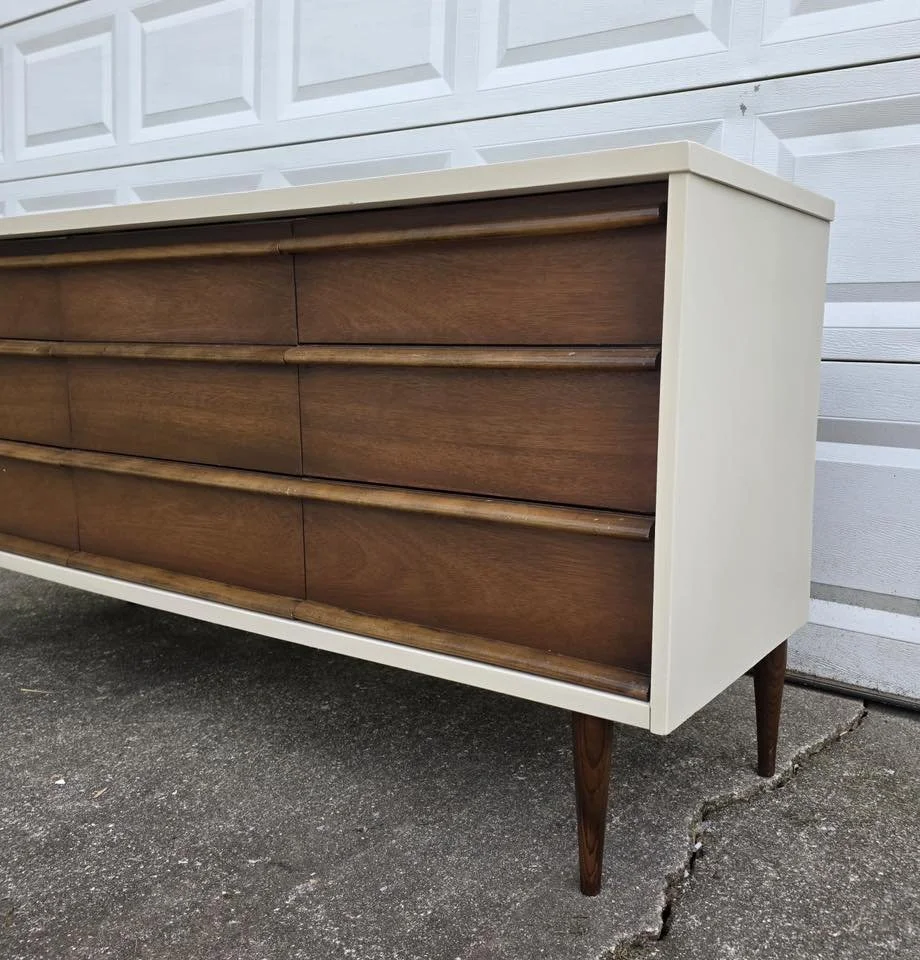
Example from The Flip Side 865
Cabriole legs (curved): French provincial, traditional
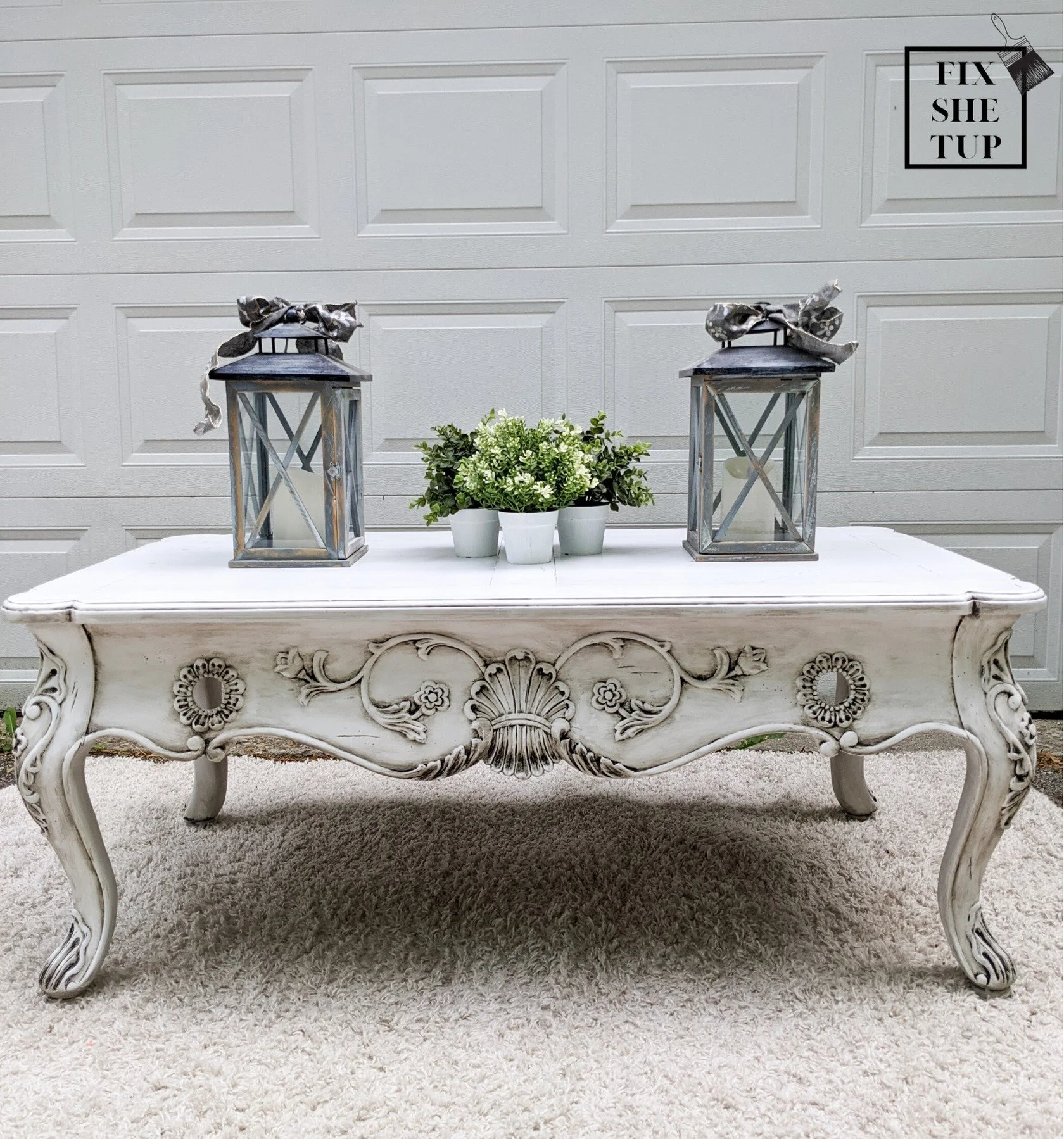
an additional description here could be “ornate”. The have claw feet vibes but not quite there.
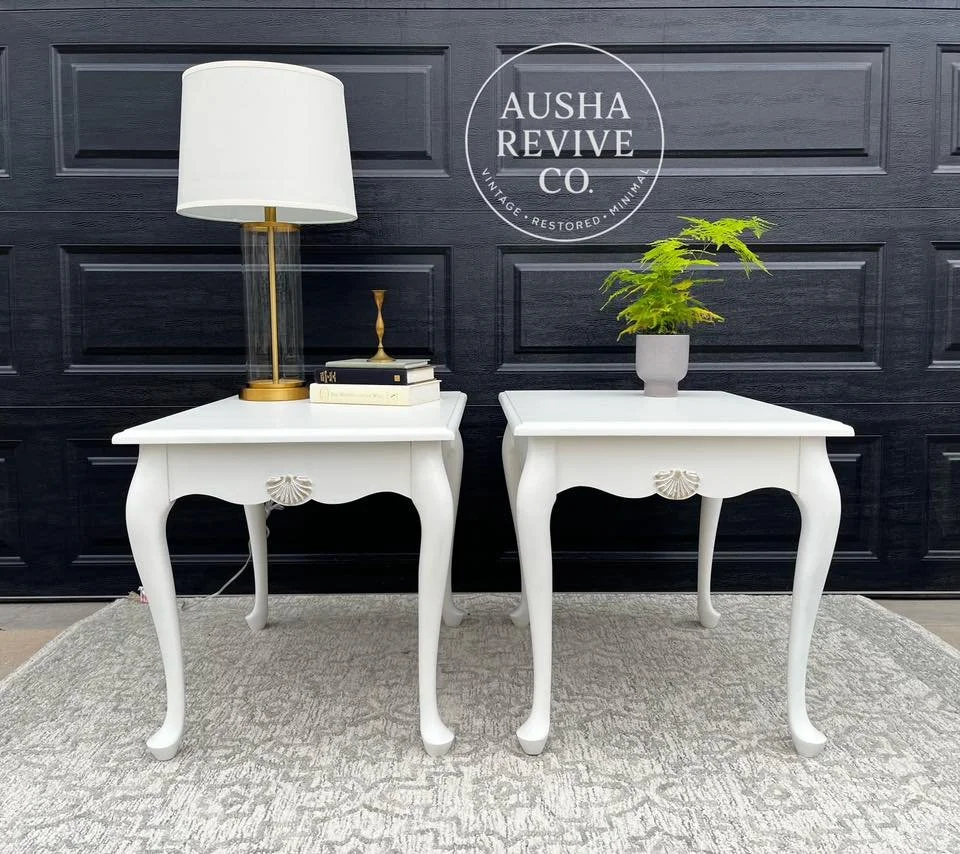
Example provided by Ausha Revive Co of cabriole legs with spoonfeet.
Turned legs: Farmhouse, traditional
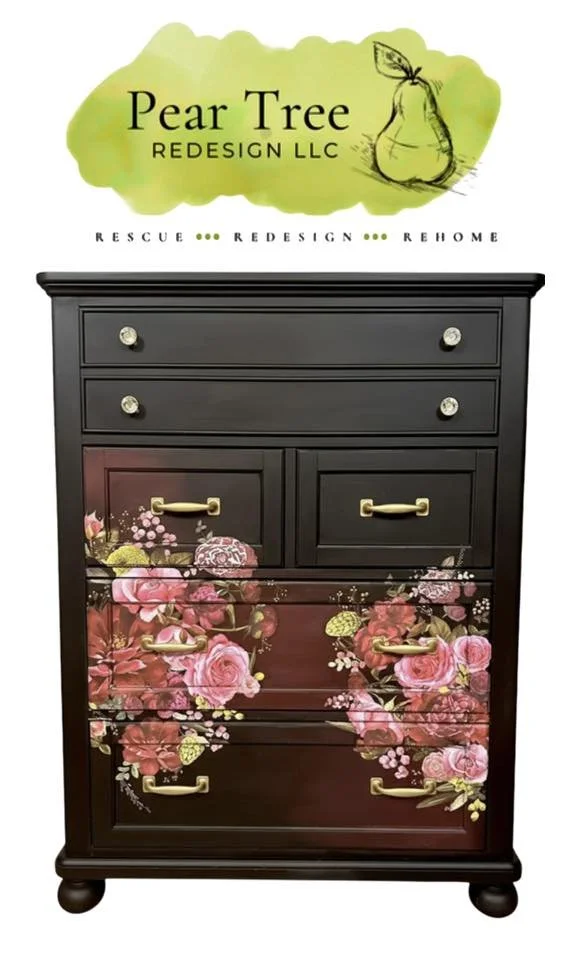
These feet are “turned” and typical of classic furniture. You will see it in farmhouse designs as well. Thank you to Pear Tree Design for the example.
Hairpin legs: MCM, industrial, modern
If the legs don’t match the style, the piece probably doesn’t either.
2. Study the Overall Shape & Lines
Ask yourself:
Are the lines clean or ornate?
Is the shape boxy or curved?
Is it minimal or decorative?
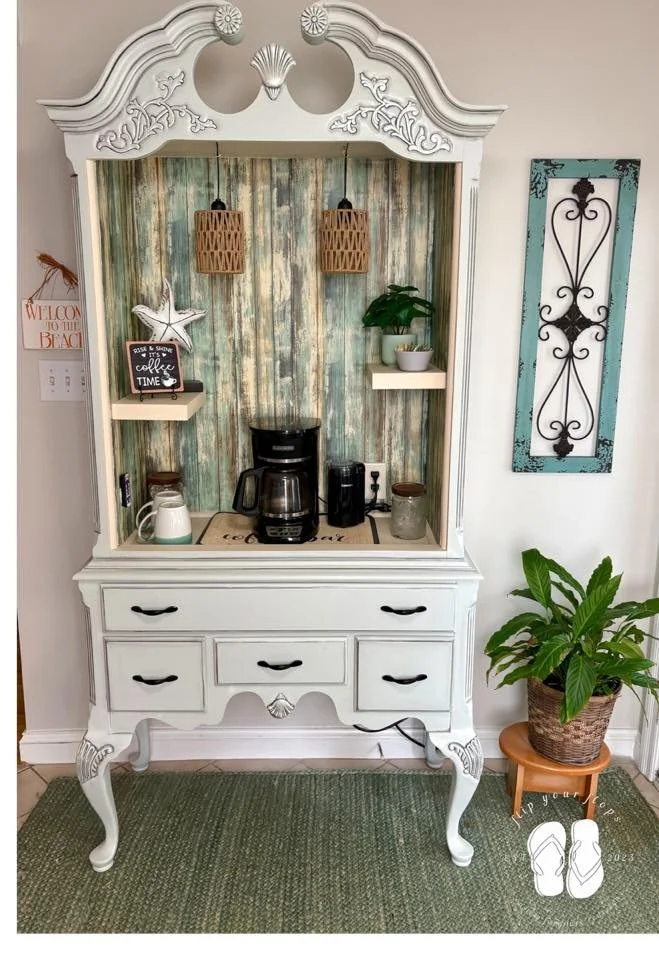
Here is an example of an ornate, curvy and decorative piece of furniture. Thank you Flip Your Flops for the example.
Clean + simple usually points to modern or MCM.
Curves + detail usually point to traditional or French styles.
3. Check the Hardware
Hardware tells a story.
Minimal or integrated pulls → MCM or modern
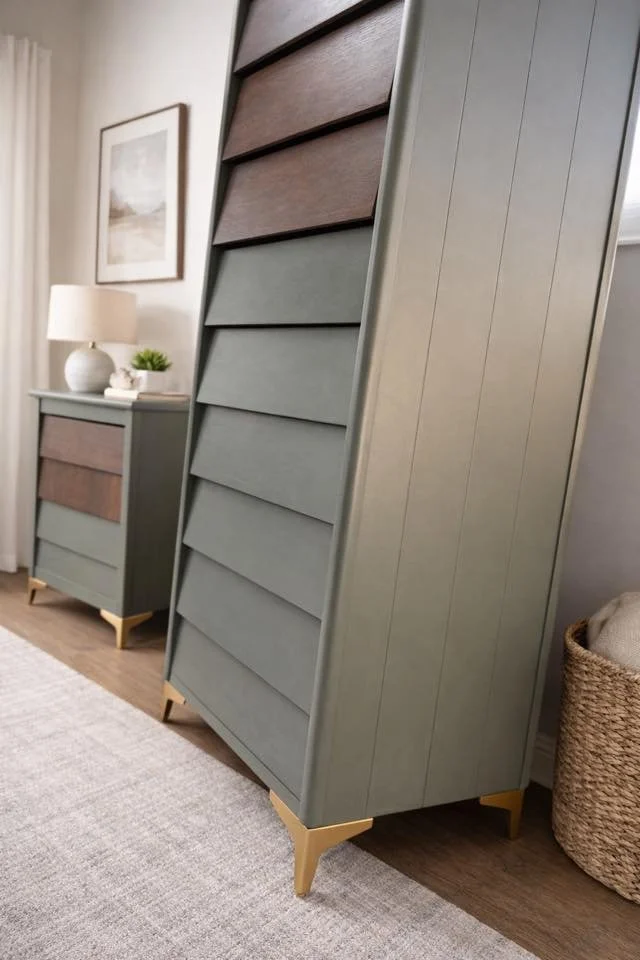
Notice the clean lines and how the pulls are a part of the drawers. Example provided by The Flip Side 865
Decorative brass → Hollywood Regency or traditional
Wooden knobs → Scandinavian or farmhouse
If hardware has been replaced, look at original drill holes.
4. Examine the Wood & Finish
Walnut & teak → common in MCM
Oak → traditional, farmhouse
Veneer → MCM, mass-produced vintage pieces
Paint does not erase the style — structure always matters more than color.
Common Furniture Styles Buyers Search for on Facebook Marketplace
Mid-Century Modern (MCM)
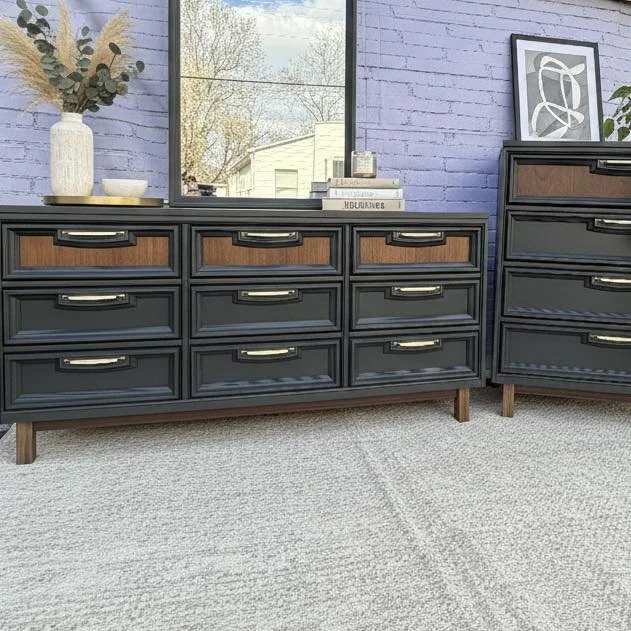
Example provided by The Flip Side 865
Key features:
Tapered legs
Clean lines
Minimal hardware
Marketplace keywords:
“Mid century modern dresser”
“MCM credenza”
“Mid century nightstand”
Don’t label everything MCM — buyers can spot misuse quickly.
Farmhouse
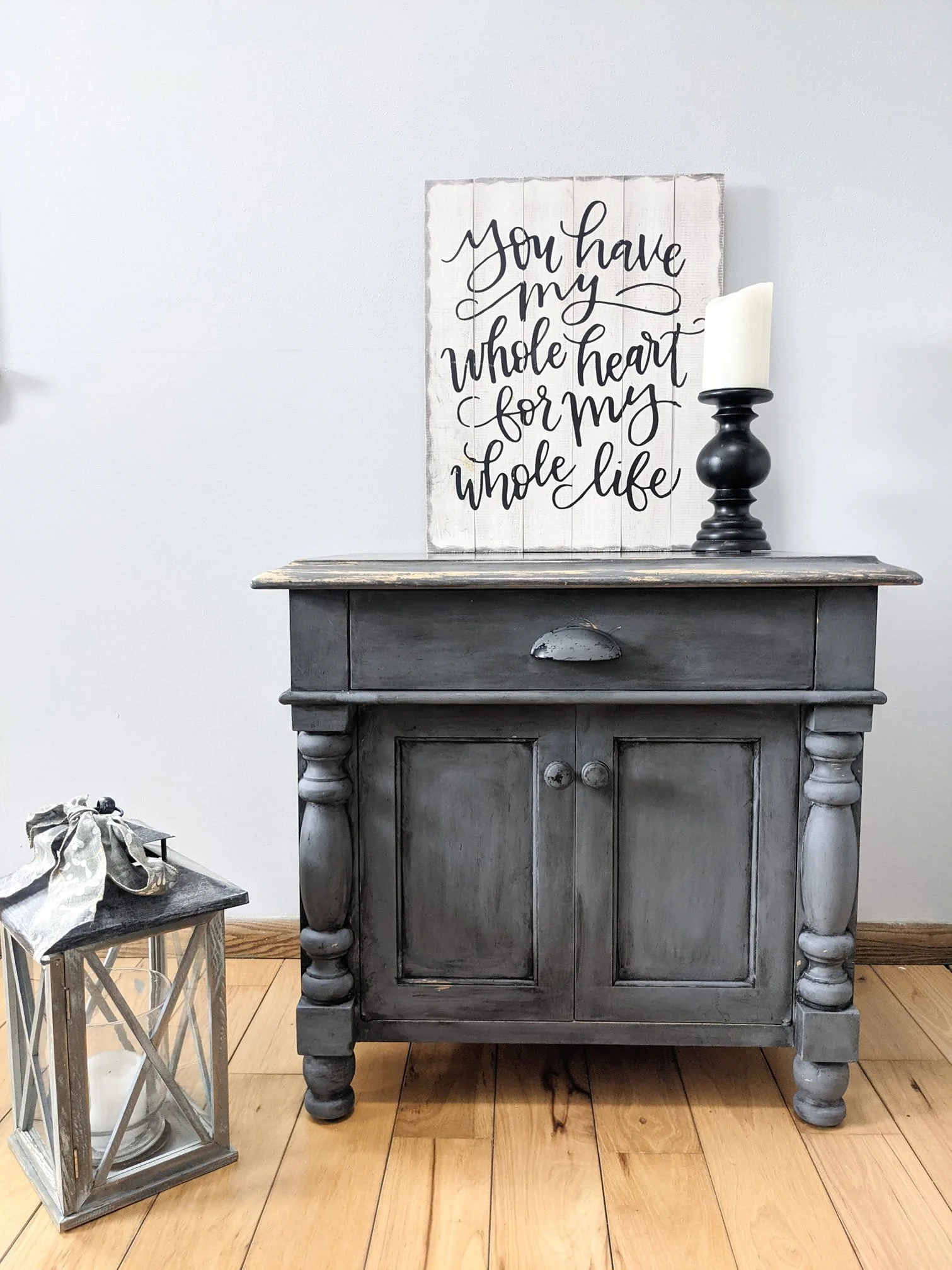
Key features:
Solid wood look
Simple construction
Rustic or neutral finishes
Keywords:
“Farmhouse dresser”
“Rustic console table”
“Modern farmhouse cabinet”
French Provincial
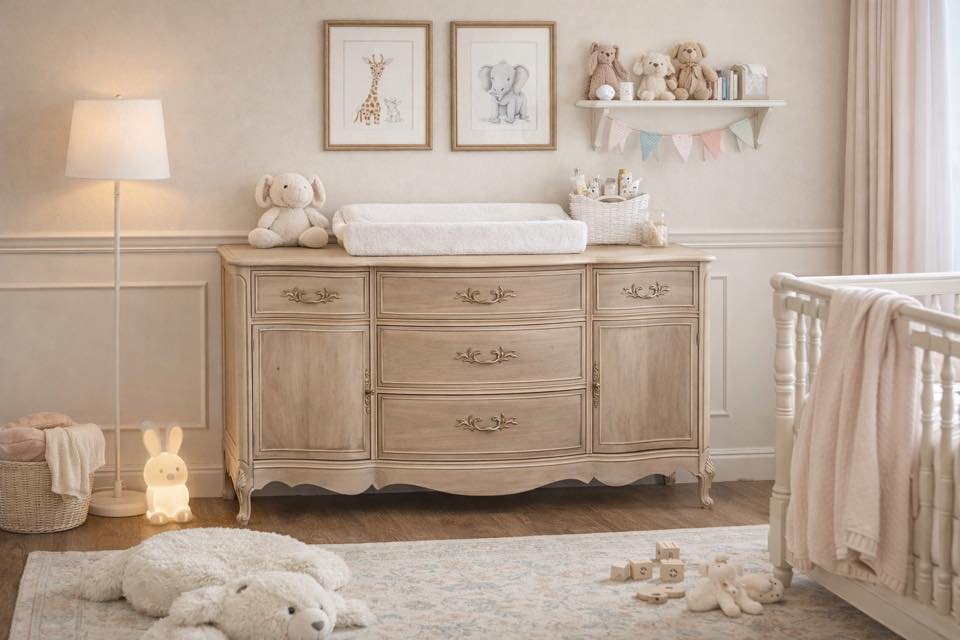
Key features:
Curved legs
Ornate detailing
Soft, feminine shapes
Keywords:
“French provincial dresser”
“Vintage French nightstand”
Traditional
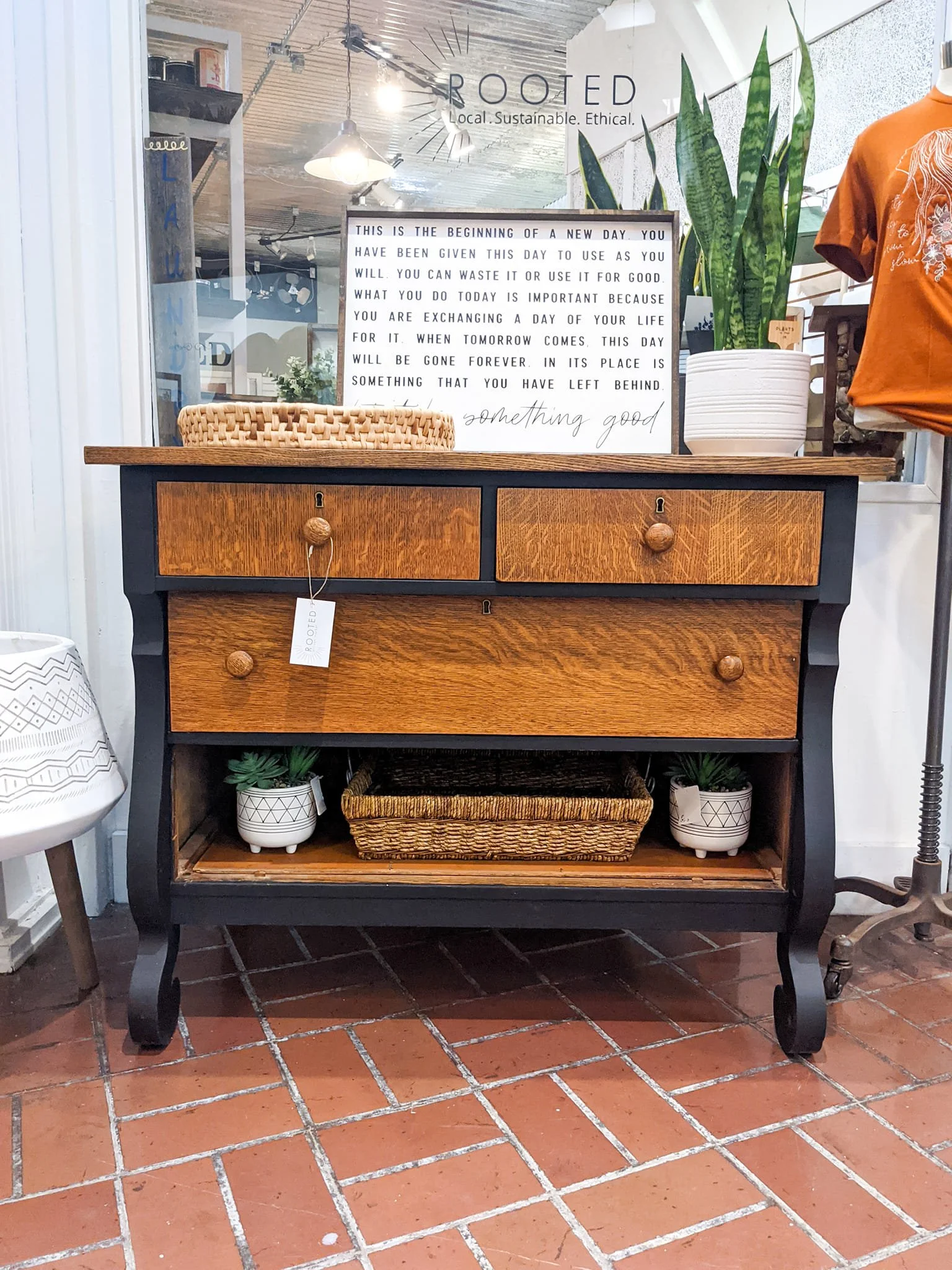
You will see a lot of traditional furniture used for a Farmhouse aesthetic
Key features:
Symmetry
Decorative trim
Heavier appearance
Keywords:
“Traditional wood dresser”
“Classic bedroom furniture”
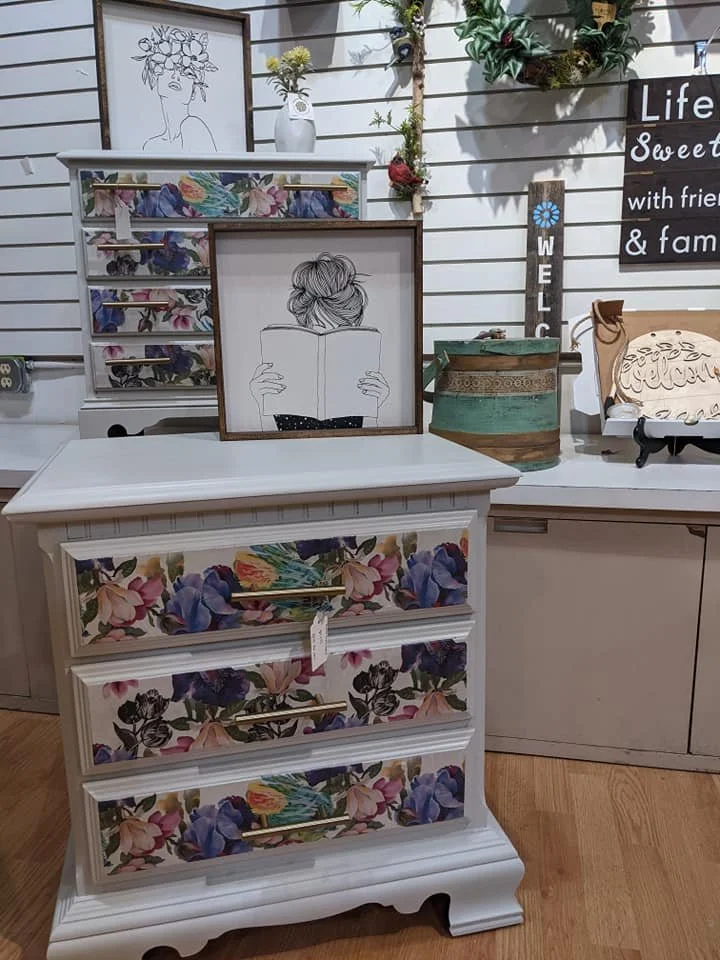
Boho / Eclectic
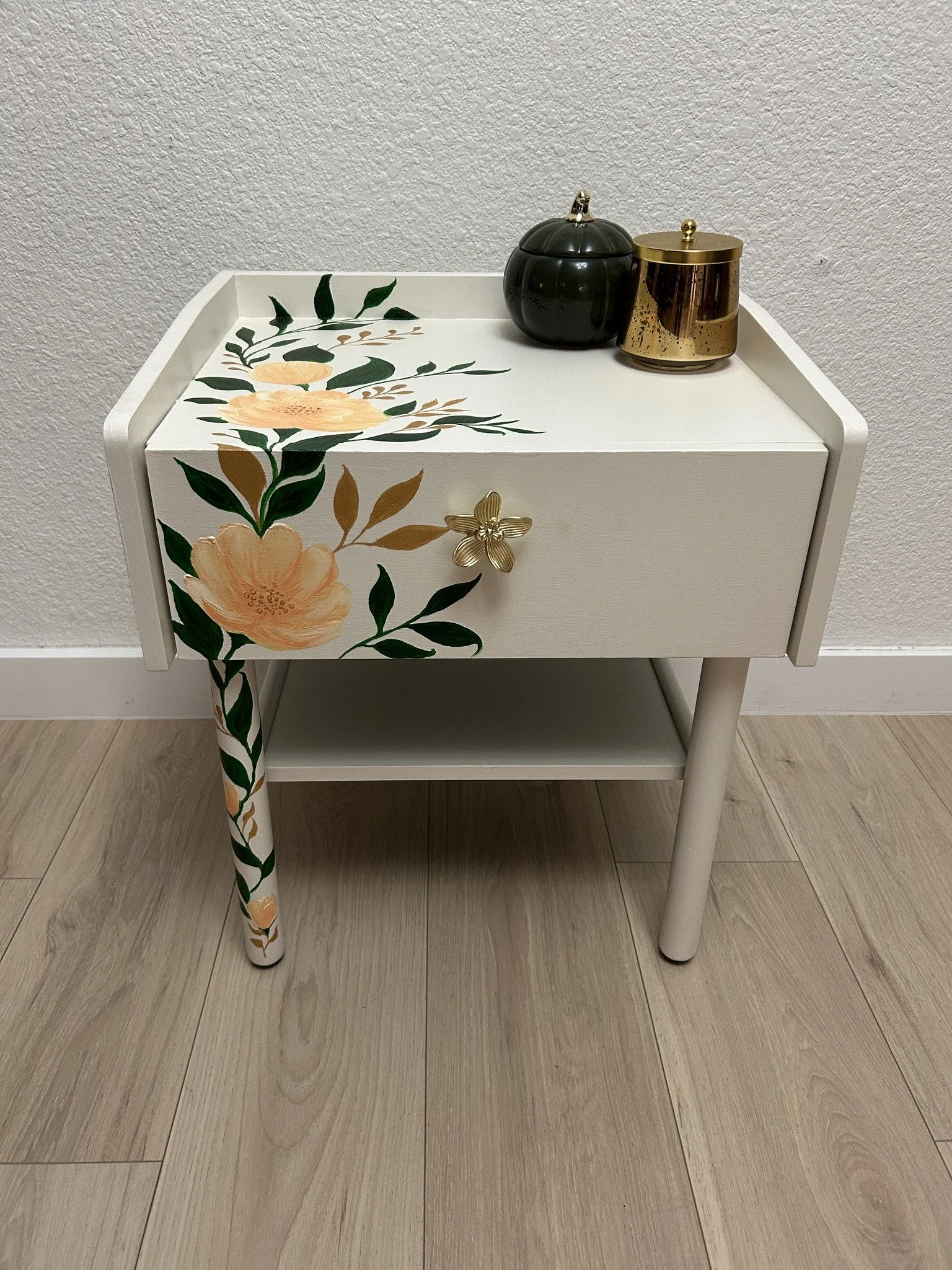
Example provided by Flippin Friends Furniture
Key features:
Mixed materials
Texture over polish
Organic shapes
Keywords:
“Boho cabinet”
“Bohemian sideboard”
Use sparingly — “boho” is often overused and vague.
Art Deco
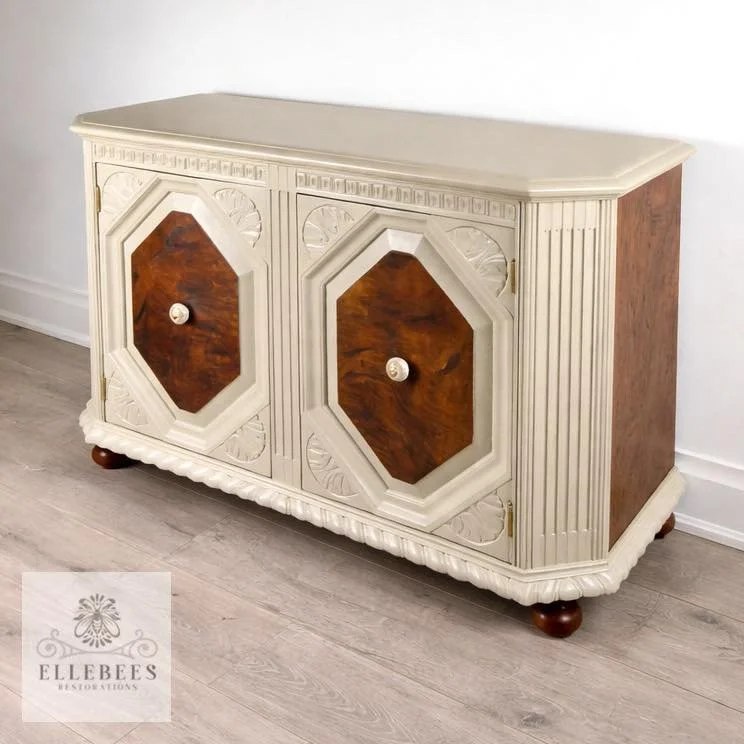
Art Deco is often confused with mid-century modern, but buyers who are searching for Art Deco specifically know what they want — and they will pay for it when it’s labeled correctly.
Key identifying features:
Strong geometric shapes
Symmetry and bold lines
Rounded or stepped edges
Decorative details without heavy carving
High-contrast finishes
Art Deco pieces often feel glamorous, structured, and intentional, even when they’re simple in form.
Common Art Deco Furniture Pieces
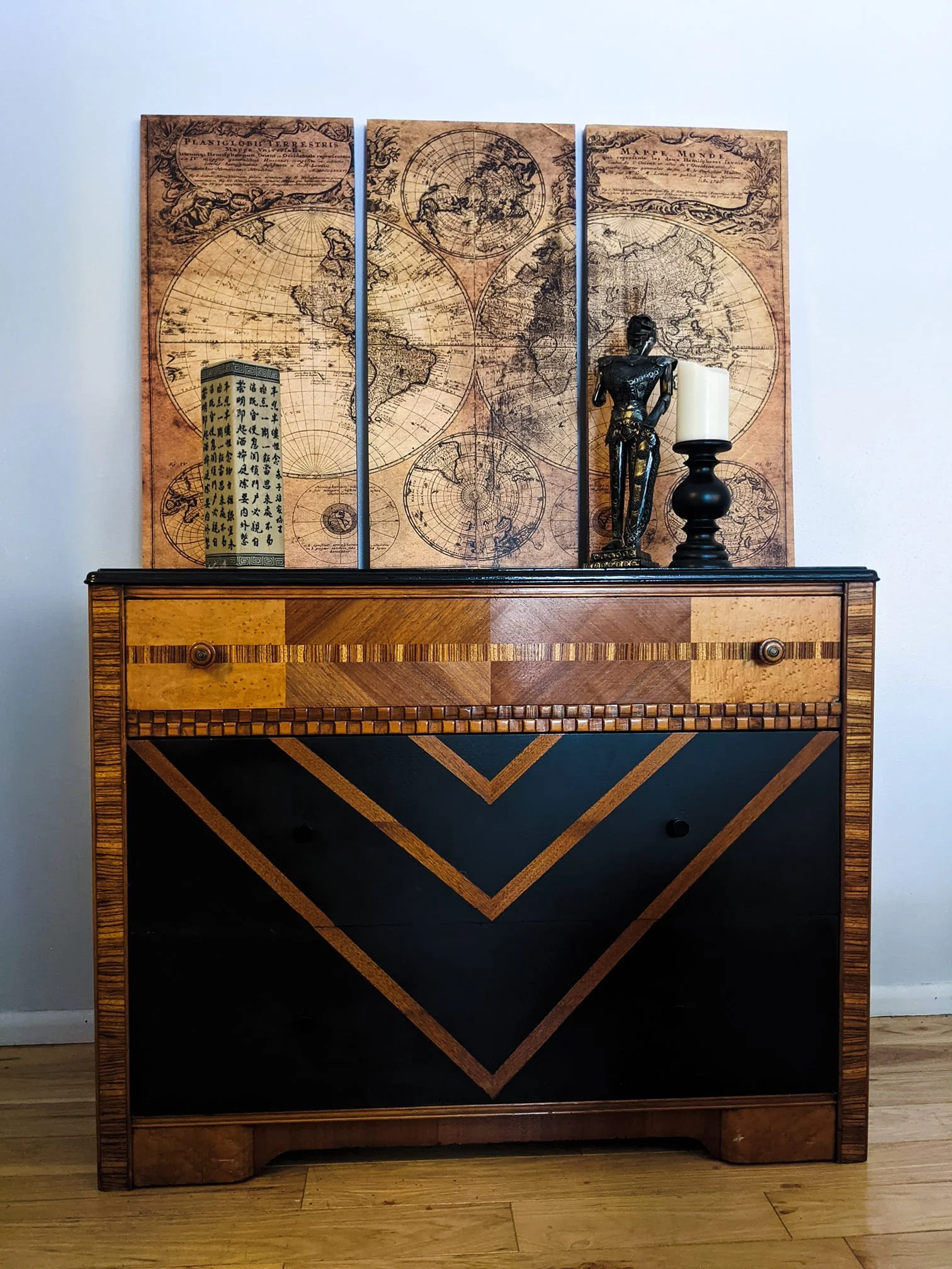
Dressers and vanities
Nightstands
Waterfall-style dressers
Sideboards and buffets
Waterfall dressers (with rounded, cascading fronts) are one of the most commonly misidentified Art Deco pieces — and one of the most searched.
How Art Deco Differs From Mid-Century Modern
This is where many flippers get tripped up:
Art Deco: Decorative, symmetrical, rounded, bold
Mid-Century Modern: Minimal, organic, tapered legs, understated
If the piece feels ornamental rather than minimal, it’s likely Art Deco, not MCM.
Facebook Marketplace Keywords to Use
Use clear, confident phrasing buyers are already searching:
“Art Deco dresser”
“Vintage Art Deco vanity”
“Art Deco waterfall dresser”
“Art Deco nightstand”
On Facebook Marketplace, including “Art Deco” early in the title significantly improves visibility for the right buyer.
Style vs Era: Stop Using These as the Same Thing
These are descriptors, not styles:
Vintage
Antique
Retro
Correct format:
Vintage Mid-Century Modern Dresser
Antique French Provincial Nightstand
Facebook Marketplace ranks listings better when keywords are clear and specific.
How to Research Furniture Styles Online
Facebook Marketplace (Most Important)
Search your style keyword
Filter by Sold
Note pricing, wording, and photos
eBay
eBay is excellent for:
Style verification
Nationwide pricing
Detailed descriptions
Search:
“Mid century modern dresser sold”
Etsy
Etsy buyers are style-driven and design-focused, making it perfect for learning how styles are described.
If you want to sell furniture on Etsy, I break down exactly how to do that in my full guide here:
Click here to learn how to sell furniture on Etsy
How to Write a Facebook Marketplace Listing That Gets Found
SEO-Friendly Title Formula
Style + Furniture Type + Material (optional)
Examples:
“Mid Century Modern Walnut Dresser”
“French Provincial White Nightstand”
“Farmhouse Solid Wood Console Table”
Description Checklist
Restate the style in the first sentence
Include dimensions
Mention condition honestly
Use natural keywords (don’t stuff)
Facebook pulls keywords from both the title and description.
Common Style Mistakes That Hurt Sales
Labeling everything “MCM”
Using “boho” with no supporting features
Ignoring legs and hardware
Guessing instead of researching
When in doubt: describe what you see, then research.
Why Accurate Style Identification Increases Profit
When buyers can find your listing:
You get more views
You get better buyers
You can charge more confidently
Style knowledge is one of the fastest ways to level up as a furniture flipper — without spending more money.
Final Tip
Before you list, ask yourself:
If I were the buyer, what would I search to find this piece?
That question alone can change everything.